Welcome to the May 2024 edition of Ceva Insights – your monthly briefing on the economic landscape. May 2024 saw a complex interplay of economic signals and market reactions, influenced by shifting inflation trends and central bank policies. This newsletter delivers a detailed analysis of the month’s developments across equities, fixed income, and alternative investments, providing you with a comprehensive overview of the financial landscape.
Key Highlights: Navigating May of 2024
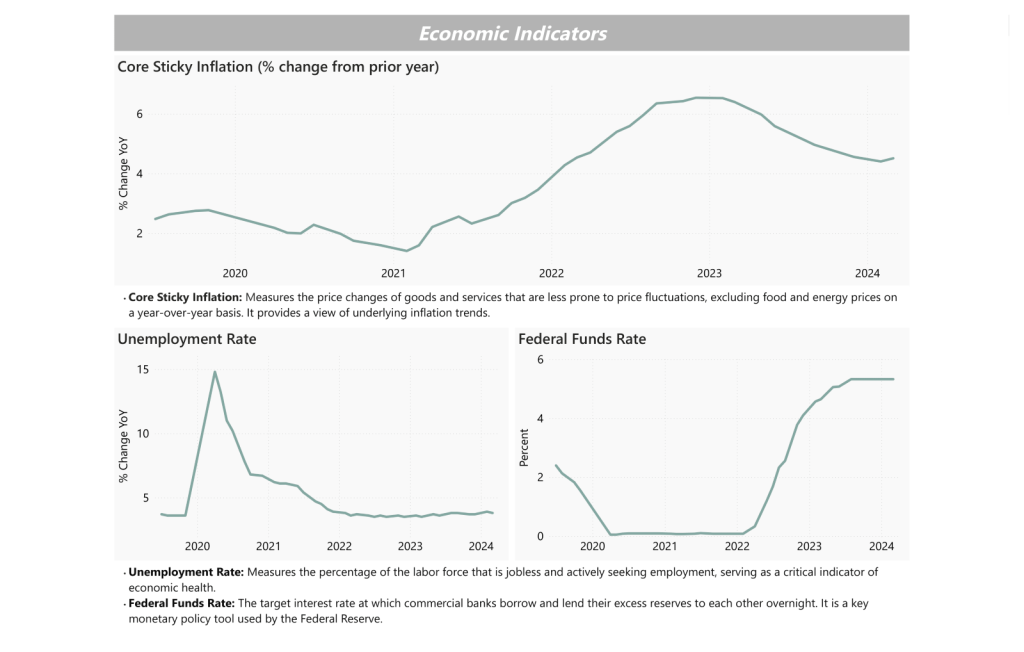
Economic Overview: May 2024 witnessed a shifting economic atmosphere, initially marked by optimism from easing inflation, but later tempered by persistent global inflation concerns, influencing central bank policies and market sentiment.
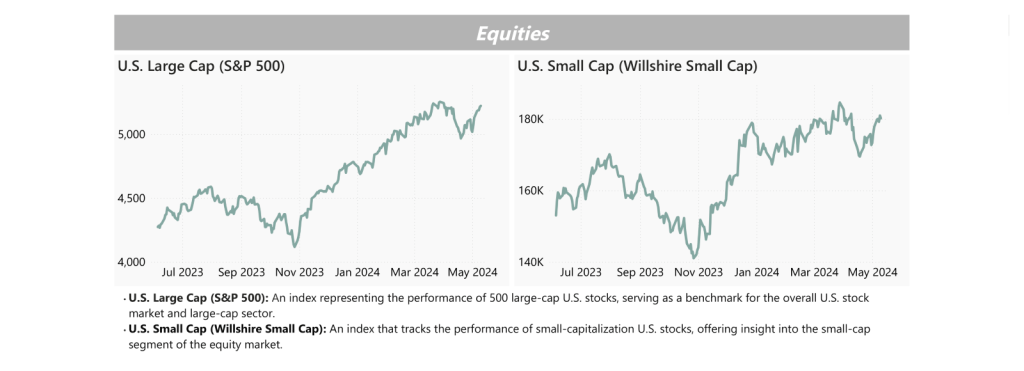
Equity Insights: Equity markets showed volatility in May, with the S&P 500 reaching new highs mid-month due to easing inflation, yet retracting some gains towards the end, ultimately securing a 5.0% increase for the month.
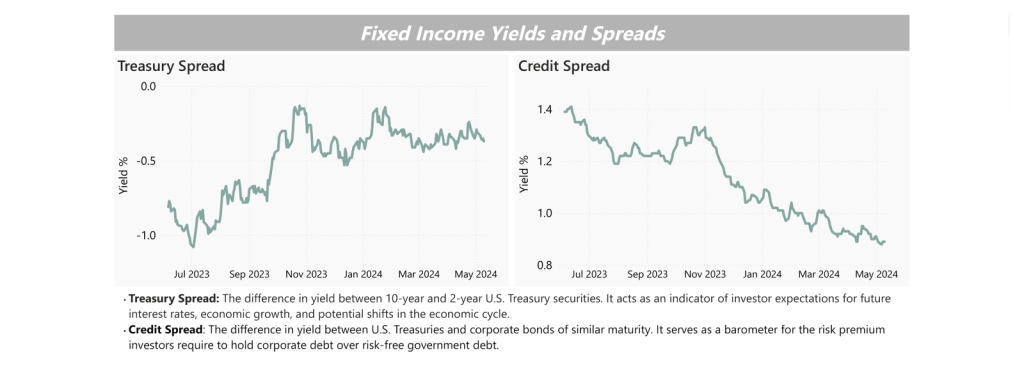
Fixed Income Analysis: Fixed income markets saw early gains with U.S. Treasuries rallying due to a dovish Federal Reserve stance, though faced a pullback due to inflation fears, concluding the month with a +1.5% total return.
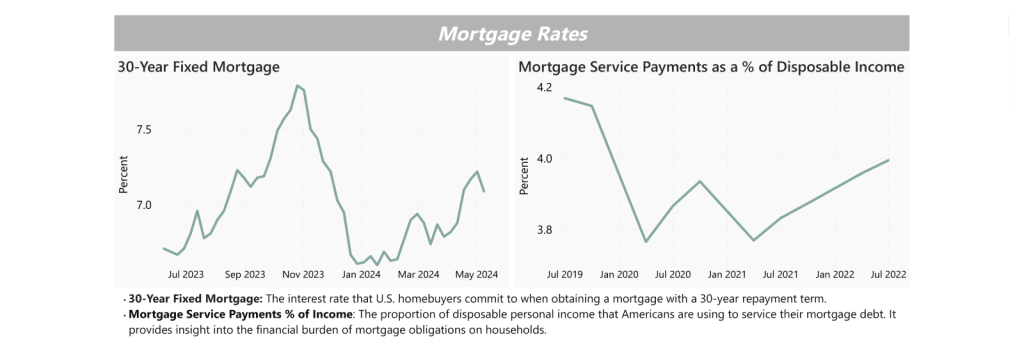
Real Estate Sector Review: The commercial real estate market in May grappled with high interest rates and evolving work patterns, leading to record-high office vacancies and mixed demand across retail and industrial sectors.
Economic Overview
May 2024 presented a complex economic scenario, marked by fluctuations in inflation and adjustments in monetary policy:
Inflation and Federal Reserve Stance:
The month started on a hopeful note with U.S. inflation easing from its first-quarter pace, which fostered initial optimism for a possible soft landing. This was further supported by the Federal Reserve’s less hawkish stance, as indicated by Fed Chair Powell during the early May meeting where he stated it was “unlikely that the next policy rate move will be a hike.”
Despite these calming signals, the overall inflation narrative remained complex. By mid-month, global inflation data began showing resilience, complicating the expected easing trajectory and reigniting concerns over sustained higher inflation.
This nuanced economic landscape illustrates the delicate balance central banks are attempting to maintain between fostering economic growth and controlling inflation pressures, which continues to challenge market participants.
Equities
In May 2024, equity markets displayed significant resilience and volatility, impacted by changing economic signals and central bank communications. The month was marked by notable movements in major indices:
Mid-month, the S&P 500 and STOXX 600 reached new record highs, buoyed by easing inflationary pressures and dovish signals from central banks which fueled investor optimism.
However, the latter half of the month saw these gains retract somewhat as renewed inflation concerns resurfaced, leading to increased market caution.
Despite these challenges, the S&P 500 managed to close the month with a net positive gain, up by 5.0%. This performance underscores the complex interplay between investor sentiment, inflation expectations, and the broader economic outlook.
Fixed Income
The fixed income market in May 2024 exhibited fluctuations influenced by evolving economic indicators and monetary policy expectations:
U.S. Treasuries saw a rally, with the yield on the 10-year note dropping from 4.68% at the end of April to 4.34% by mid-May, underscoring a flight to safety amidst global uncertainties.
However, the rally in bonds was short-lived as the month progressed. Renewed concerns over stickier-than-anticipated inflation led to a selloff in sovereign bonds across several countries. This was particularly notable in the Euro Area, where core CPI ticked up, causing investors to scale back expectations for aggressive rate cuts by the ECB. Despite these mid-month fluctuations, U.S. Treasuries ended May on a positive note, up +1.5% on a total return basis.
The shift towards a more cautious outlook was also mirrored in other regions, emphasizing a global trend towards expecting ‘higher for longer’ interest rates, which could constrain bond prices moving forward.
Real Estate
In May 2024, the commercial real estate (CRE) sector faced ongoing challenges, marked by rising office vacancy rates reaching nearly 14% due to shifts towards hybrid work, while retail spaces saw reduced demand with vacancy rates remaining low at about 4% due to limited new constructions. The industrial segment experienced a significant drop in demand, though it still reported the fastest rent growth at 4.7% year-over-year, driven by persistent e-commerce needs and active construction. Across the board, the CRE market continues to adjust to the dual impacts of evolving workplace norms and economic pressures
Closing Remarks
As we conclude our May 2024 market review, it’s clear that the landscape is shaped by a mix of recovery in equity markets and ongoing adjustments in fixed income and real estate sectors. The cautious optimism seen in financial markets is tempered by the complexities of inflationary pressures and geopolitical calm, presenting a nuanced environment for investors.
Our goal is to offer you a comprehensive understanding of the past month’s dynamics, empowering you with the knowledge to make informed decisions. We look forward to providing you with further updates and insights in future editions. Thank you for joining us in this comprehensive review of the May 2024 financial landscape.
Allen, Henry and Jim Reid. “May 2024 Performance Review.” Deutsche Bank Research, June 1, 2024
Goodman, David. “5 Things You Need to Know to Start Your Day: May 2 – May 31, 2024 Series.” Bloomberg, May 2 – May 31, 2024.
IMPORTANT DISCLOSURE: The information contained in this report is informational and intended solely to provide educational content to our clients and other readers that we find relevant and interesting. Opinions expressed are just that, and are current only as of the data of publication Nothing in this document should be construed as investment advice; we provide advice on an individualized basis only after understanding your circumstances and needs. The information presented in this newsletter is based on reports from Deutsche Bank and Bloomberg’s ‘5 Things You Need to Know to Start Your Day’ series. Data provided comes from sources we believe are reliable, but accuracy is not guaranteed. Discussion of sectors and the performance of region-specific equities and bonds generally refers to market indices. We use the S&P 500 to represent US large-cap; the Willshire Small Cap to represent US small-cap; the MSCI ACWI ex US to represent international equities; the US 10-year Treasury Yield to represent US Treasuries; the ICE BofA European Government Bond Index to represent European bonds; the ICE BofA US Corporate Index Effective Yield to represent investment-grade bonds; the ICE BofA US High Yield Index Effective Yield to represent high-yield bonds. Indices are unmanaged, are not subject to investment management fees or transaction costs, and it is not possible to invest in an index. Index performance can provide general information about how a particular region or investment has performed, but does not provide information about the performance of Ceva’s client portfolios. Actual client performance may differ materially from the index performance discussed. Past performance is not a guarantee of future results. Financial planning is a tool that can help clients consider different current and future scenarios and construct portfolios designed to meet specific goals and address specific risks. Financial planning does not guarantee a positive outcome or prevent loss. It’s important to revisit financial plans and the underlying assumptions of those plans regularly, and to make adjustments as needed to respond to changing circumstances.