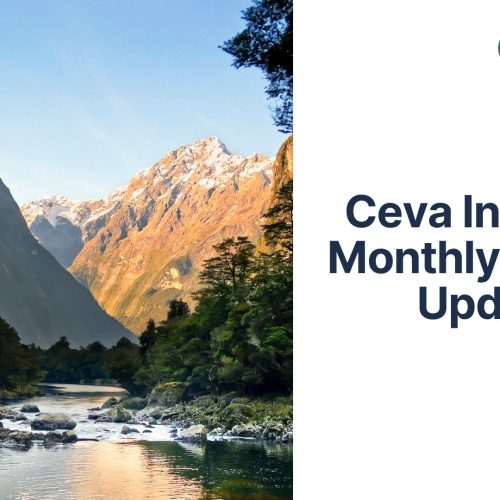
July started out fairly quiet for the Skurdal family. To bring some excitement to the close of the month, we visited Denver, CO for a trip to celebrate a cousin’s wedding. In an effort to add some chaos to the weekend, I inadvertently booked myself and Noah (pictured below) on a flight into Columbus, OH, while my wife Emily’s ticket was for Cincinnati, OH. To further enhance the fun, we had driven my car, a manual, and parked it in Cincinnati, and Emily cannot drive stick. We sorted out the flights and landed in Cincinnati together, but it made for a thrilling end to July. Similarly, the month in the market closed with some excitement, which you can read about below

What Happened in July
July opened quietly, with market volatility (measured by the VIX, a common gauge of expected stock market swings) dropping to its lowest level since January. That calm didn’t last. When President Trump declared the truce with Iran reached in June “over,” both countries resumed strikes near the Strait of Hormuz, the narrow waterway that carries a large share of the world’s oil supply. Brent crude, the global oil benchmark, climbed from $71 a barrel to just over $100 by July 23 before easing back to around $90 by month’s end, a move that likely showed up at the gas pump. For the month, Brent gained 23.6% and West Texas Intermediate, the main U.S. oil benchmark, rose 21.8%. The Fed, meeting on July 29, held its benchmark rate steady at 3.50% to 3.75%, though three of twelve voting committee members favored raising it, a signal that a more cautious approach could be ahead. Chair Warsh offered little guidance on what comes next, and that uncertainty, layered on top of oil-driven inflation concerns, pushed longer-term Treasury yields to multi-year highs: the 30-year yield closed at its highest level since 2007, and the 10-year rose to 4.74%, its highest point since January 2025.
Inflation signals leaned encouraging even so. Consumers surveyed by the University of Michigan expected 4.2% inflation over the year ahead, down from 4.6% in June, while the Cleveland Fed’s inflation model projected headline inflation cooling to 3.42% in July from 3.5% the month before. Both remain above the Fed’s 2% target, and futures markets were pricing roughly two-in-three odds of another rate move at the Fed’s September meeting as of early August. Technology stocks went through their own reckoning as investors grew more cautious about the pace of spending on artificial intelligence. The Philadelphia Semiconductor Index, a benchmark for chipmakers, fell 20.6% for its worst month since 2008, and the selloff hit South Korea’s KOSPI index especially hard, though it rebounded sharply in the final days of July and remains the best-performing major stock market in the world so far this year. The broader U.S. market held up better than the headlines suggested. The S&P 500 was roughly flat for the month, while the equal-weighted version of the same index, which doesn’t let a handful of giant companies dominate the average, touched a fresh record high on July 28 as money rotated toward sectors beyond technology.
International markets participated in their own way. European stocks outperformed on solid eurozone growth, while Japan’s currency swung sharply before steadying on coordinated intervention late in the month. Taken together, July was a reminder that markets rarely move for just one reason at a time. Oil, interest rates, and shifting views on artificial intelligence pulled in different directions within the same few weeks, yet a diversified portfolio, one not overly concentrated in any single sector or story, showed real value in absorbing those crosscurrents rather than being defined by any one of them.
Wrapping Things Up
Months like July are a good reminder that no one, including us, can predict which headline will move markets next or when. What we can do is build a plan designed to hold up across many kinds of months, not just the calm ones. If anything about the current environment, oil prices, interest rates, or the pace of change in technology, has you thinking about your own portfolio or plan, we would welcome the chance to talk it through with you.
Data sourced from Deutsche Bank Research, "Early Morning Reid: July 2026 Performance Review," dated August 3, 2026. Additional data from CME Group's FedWatch Tool, the University of Michigan Survey of Consumers, and the Federal Reserve Bank of Cleveland's Inflation Nowcasting model.

IMPORTANT DISCLOSURE: This article is produced by Ceva Capital LLC dba Ceva Advisors. The information contained in this report is informational and intended solely to provide educational content to our clients and other readers that we find relevant and interesting. Opinions expressed are just that, and are current only as of the date of publication. Nothing in this document should be construed as investment advice; we provide advice on an individualized basis only after understanding your circumstances and needs. The information presented in this newsletter is based on reports from Deutsche Bank and Bloomberg's '5 Things You Need to Know to Start Your Day' series. Data provided comes from sources we believe are reliable, but accuracy is not guaranteed. Discussion of sectors and the performance of region-specific equities and bonds generally refers to market indices. We use the S&P 500 to represent US large-cap; the Wilshire Small Cap to represent US small-cap; the MSCI ACWI ex US to represent international equities; the US 10-year Treasury Yield to represent US Treasuries; the ICE BofA European Government Bond Index to represent European bonds; the ICE BofA US Corporate Index Effective Yield to represent investment-grade bonds; the ICE BofA US High Yield Index Effective Yield to represent high-yield bonds. Indices are unmanaged, are not subject to investment management fees or transaction costs, and it is not possible to invest in an index. Index performance can provide general information about how a particular region or investment has performed, but does not provide information about the performance of Ceva's client portfolios. Actual client performance may differ materially from the index performance discussed. Past performance is not a guarantee of future results. Financial planning is a tool that can help clients consider different current and future scenarios and construct portfolios designed to meet specific goals and address specific risks. Financial planning does not guarantee a positive outcome or prevent loss. It's important to revisit financial plans and the underlying assumptions of those plans regularly, and to make adjustments as needed to respond to changing circumstances.