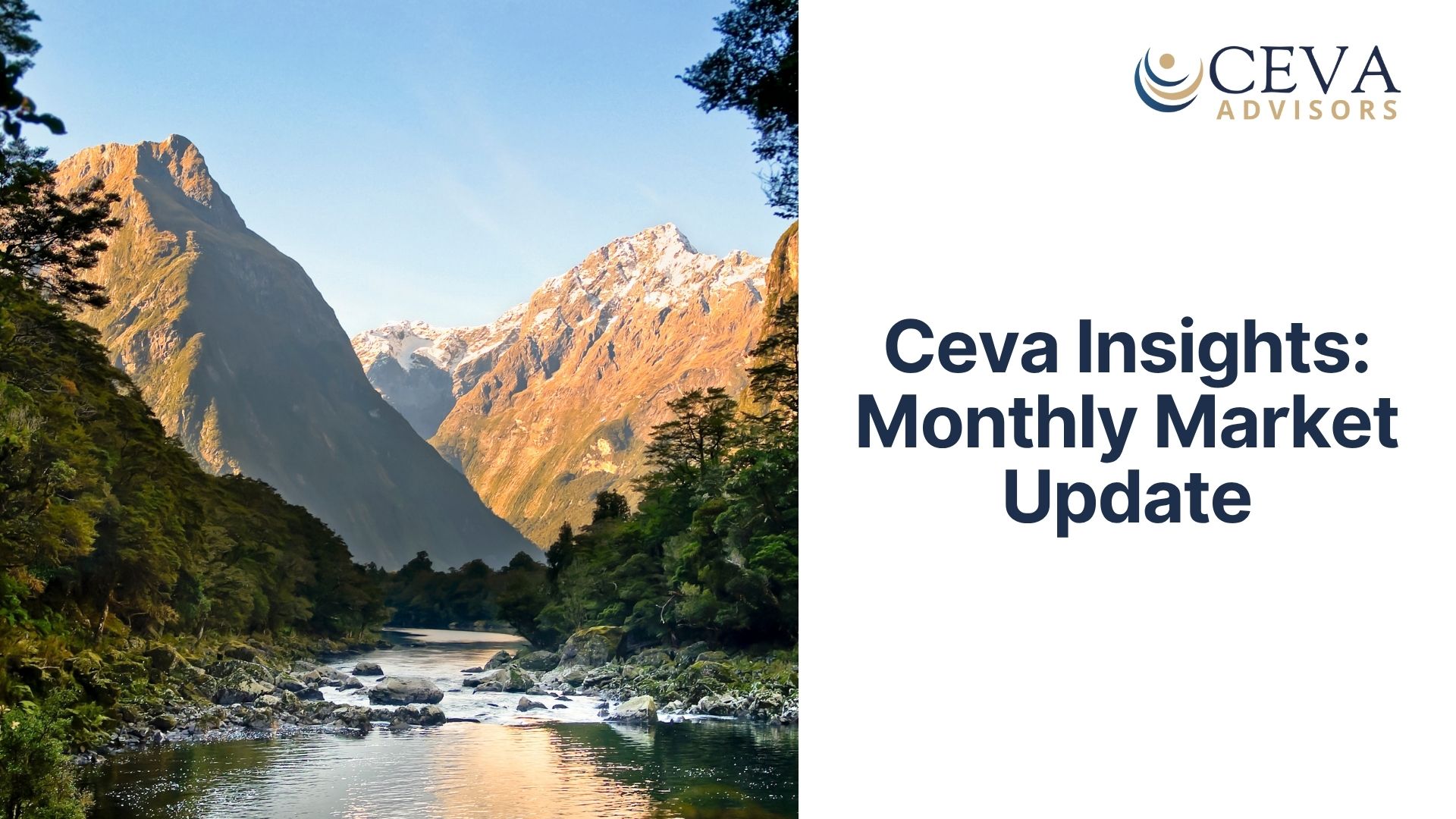
As the market touched all-time highs in May, we have been fortunate to summit our own peaks in the Dolomites. It has been two years since Shaina and I were able to get away with just the two of us for a much needed vacation, and Italy has been the perfect place for it. The jagged Dolomite mountain range pictured behind us fits cleanly with what we saw in financial markets over the past month, which you can read about below.

What Happened in May
The first half of May brought genuine concern. A stronger-than-expected U.S. core inflation report on May 12 rattled markets, reinforcing the worry that prices were proving stickier than hoped. With the Strait of Hormuz still blocked and oil prices continuing to climb, the combination of elevated energy costs and a hot inflation reading pushed bond yields sharply higher. By May 19, the 30-year Treasury yield had reached its highest level since 2007, at 5.18%, and similar records were set in Germany and Japan. For investors holding bonds, that mid-month stretch was uncomfortable. For equity investors, it raised the question of whether the Federal Reserve might need to keep rates higher for longer, which weighs on stock valuations. The mood shifted from cautious optimism at the start of the month to something closer to unease.
The second half of May told a different story. Late in the month, credible reports began to emerge that the U.S. and Iran were approaching an agreement on a 60-day ceasefire extension, with broader nuclear negotiations to follow. That possibility changed the calculus on inflation almost immediately. If the Strait of Hormuz were to reopen, the oil supply picture would look very different, and much of the inflation pressure that had been worrying markets could ease on its own without the Fed having to act more aggressively. Brent crude fell sharply on the news and closed May down roughly 19% for the month, its steepest monthly decline since the early days of the pandemic. In that context, the Treasury market staged a notable recovery, with the 10-year yield falling for seven consecutive sessions into month-end. Stocks responded in kind, with the S&P 500 rising seven days in a row to close at a new all-time high, finishing the month up 5.3% in total return terms. Semiconductor and AI-related stocks were among the standouts, with the Philadelphia semiconductor index gaining more than 22% for May.
The through-line connecting both halves of the month is that a single geopolitical development, specifically whether a deal with Iran was close or far away, drove the dominant narrative for bonds, stocks, and commodities alike. Gold, which had risen sharply earlier in the year along with inflation fears, slipped about 1.7% in May as those fears receded, closing near $4,540 per ounce, while international equity markets participated in the rally seen by U.S. equities. Taken together, it was a month that looked concerning in the middle but turned meaningfully positive by the end, driven largely by diplomacy rather than economics.
Wrapping Things Up
May is a good reminder that markets are often driven by events that are difficult to predict and nearly impossible to time. The single biggest factor shaping financial assets last month was the status of diplomatic negotiations thousands of miles away. No model or forecast reliably predicted that, and it is worth being humble about what we can know in advance. What we can do is build portfolios designed to hold up across a range of conditions, keep you focused on your long-term goals, and make sure your plan is not dependent on any one outcome going right. If you have questions about how current events are affecting your portfolio, we are always happy to talk through it with you.
Data sourced from Deutsche Bank Research, "Early Morning Reid: May 2026 Performance Review," dated June 1, 2026.

IMPORTANT DISCLOSURE: This article is produced by Ceva Capital LLC dba Ceva Advisors. The information contained in this report is informational and intended solely to provide educational content to our clients and other readers that we find relevant and interesting. Opinions expressed are just that, and are current only as of the date of publication. Nothing in this document should be construed as investment advice; we provide advice on an individualized basis only after understanding your circumstances and needs. The information presented in this newsletter is based on reports from Deutsche Bank and Bloomberg's '5 Things You Need to Know to Start Your Day' series. Data provided comes from sources we believe are reliable, but accuracy is not guaranteed. Discussion of sectors and the performance of region-specific equities and bonds generally refers to market indices. We use the S&P 500 to represent US large-cap; the Wilshire Small Cap to represent US small-cap; the MSCI ACWI ex US to represent international equities; the US 10-year Treasury Yield to represent US Treasuries; the ICE BofA European Government Bond Index to represent European bonds; the ICE BofA US Corporate Index Effective Yield to represent investment-grade bonds; the ICE BofA US High Yield Index Effective Yield to represent high-yield bonds. Indices are unmanaged, are not subject to investment management fees or transaction costs, and it is not possible to invest in an index. Index performance can provide general information about how a particular region or investment has performed, but does not provide information about the performance of Ceva's client portfolios. Actual client performance may differ materially from the index performance discussed. Past performance is not a guarantee of future results. Financial planning is a tool that can help clients consider different current and future scenarios and construct portfolios designed to meet specific goals and address specific risks. Financial planning does not guarantee a positive outcome or prevent loss. It's important to revisit financial plans and the underlying assumptions of those plans regularly, and to make adjustments as needed to respond to changing circumstances.