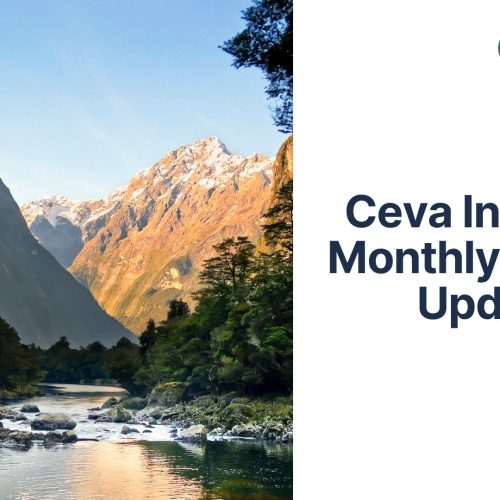
March is finally in the rearview mirror, and it’s incredible how quickly the season has shifted. The snowpack is almost entirely gone now, which feels like a bit of a mercy given what a disappointing ski season it was this past year.
The highlight of this last month was definitely our trip out to Ohio to visit Roman for our pickleball tournament. Shaina and I had a great time in the Midwest; we flew into Cincinnati and then took a brief detour to visit some friends just outside of Indianapolis. That detour gave us the chance to explore downtown Indianapolis for the first time on a beautiful Sunday afternoon.
I have to admit, I didn’t expect it to have such a distinct “Venice” feel, complete with gondolas drifting down the water. We spent the afternoon walking along the Central Canal Walk (the “cut” through the heart of the city), which was surprisingly scenic.

Rising Costs & Market Adjustments
On the markets front, March was a month many of us felt in everyday life, not just on paper. After a strong start to the year, things shifted quickly as geopolitical tensions escalated late in February. Energy prices jumped sharply, with oil finishing the quarter up 94% and closing near $118 per barrel, a move most people noticed immediately when filling up their cars or seeing higher transportation and heating costs ripple through the economy. That sudden increase helped push inflation concerns back into the spotlight and set the stage for a choppier market environment through March.
That unease showed up across financial markets. In March alone, the S&P 500 fell 5.0%, its worst month in over a year, while Europe’s STOXX 600 dropped 7.5%, reflecting the strain higher energy costs place on households and businesses overseas. Interest rates also moved higher, with the 10‑year U.S. Treasury yield rising 38 basis points during the month to 4.32%, something many people felt indirectly through higher mortgage rates, auto loans, and borrowing costs. Areas of the market tied closely to growth expectations, particularly technology and software, struggled the most, with software stocks down 23.7% for the quarter.
Not everything moved in the same direction, and that contrast mattered. Energy was the clear standout, while traditional safe havens were more mixed. Gold finished the quarter up 8.1%, even after falling 11.6% in March, a reminder that markets can change direction quickly during periods of stress. The U.S. dollar also rose 1.7% for the quarter, reflecting a shift toward stability amid uncertainty. Overall, the first quarter was a reminder that uncomfortable market moments often arrive alongside real‑world pressures, but diversified portfolios are built with exactly these kinds of periods in mind.
Wrapping Things Up
Despite the noise in the markets over the first quarter of 2026, we hope you’ve at least been able to add Venice‑like Indianapolis to your bucket list. The moves have been a clear reminder of why staying broadly diversified across global markets and asset classes matters, especially during periods of uncertainty. As always, if you have questions about how your portfolio is positioned in the current environment, please reach out. We’re happy to talk through it with you.
IMPORTANT DISCLOSURE: This article is produced by Ceva Capital LLC dba Ceva Advisors. The information contained in this report is informational and intended solely to provide educational content to our clients and other readers that we find relevant and interesting. Opinions expressed are just that, and are current only as of the data of publication Nothing in this document should be construed as investment advice; we provide advice on an individualized basis only after understanding your circumstances and needs. Data provided comes from sources we believe are reliable, but accuracy is not guaranteed. Discussion of sectors and the performance of region-specific equities and bonds generally refer to market indices. We use the S&P 500 to represent US large-cap; the Willshire Small Cap to represent US small-cap; the MSCI ACWI ex US to represent international equities; the US 10-year Treasury Yield to represent US Treasuries; the ICE BofA European Government Bond Index to represent European bonds; the ICE BofA US Corporate Index Effective Yield to represent investment-grade bonds; the ICE BofA US High Yield Index Effective Yield to represent high-yield bonds. Indices are unmanaged, are not subject to investment management fees or transaction costs, and it is not possible to invest in an index. Index performance can provide general information about how a particular region or investment has performed, but does not provide information about the performance of Ceva’s client portfolios. Actual client performance may differ materially from the index performance discussed. Past performance is not a guarantee of future results. Financial planning is a tool that can help clients consider different current and future scenarios and construct portfolios designed to meet specific goals and address specific risks. Financial planning does not guarantee a positive outcome or prevent loss. It’s important to revisit financial plans and the underlying assumptions of those plans regularly, and to make adjustments as needed to respond to changing circumstances.