
Welcome to the March 2024 edition of Ceva Insights – your monthly briefing on the economic landscape. In this edition, we will delve into the current economic overview, dissect key trends in equities and fixed-income markets, and provide a focused look at the real estate sector within the alternatives investment space.
Key Highlights: Navigating March and the First Quarter of 2024
Economic Overview: The U.S. economy exhibits strong growth with robust GDP and employment figures, contrasting with mixed economic signals from Europe.
Equity Insights: Equity markets, particularly the S&P 500 and Nikkei, have shown notable growth, driven by investor confidence and technological advancements.
Fixed Income Analysis: Fixed income markets face challenges with rising interest rates and inflation concerns, affecting U.S. Treasuries and European bonds.
Real Estate Sector Review: The real estate sector presents mixed prospects, with commercial real estate showing caution and the residential market indicating stability.
Economic Overview
March 2024 has been a pivotal month, reflecting a dynamic interplay of economic indicators and central bank policies that shape the investment landscape.
Global Economic Trends: The U.S. economy demonstrates robust growth with a notable +3.4% GDP increase in the last quarter, showcasing strong labor market resilience. Conversely, Europe’s economic signals are mixed, with the Euro Area’s PMI nearing a growth threshold, indicating potential stabilization amid prevailing uncertainties.
Inflation and Monetary Policy: Inflation remains a key concern globally, steering central bank policies. The Federal Reserve’s stance is cautious, reflected in dwindling market anticipations of cuts of the Federal Funds Rate. This sentiment resonates with the Federal Reserve’s March meeting outcomes, where steady price pressures were acknowledged, suggesting a nuanced path forward for monetary adjustments.
Investor Sentiment and Market Dynamics: Investors are navigating through these economic signals, adjusting their strategies in anticipation of the Federal Reserve’s next moves. The economic backdrop, characterized by persistent inflation and policy deliberations, is pivotal for shaping the investment strategies for the upcoming quarters.

Equities & Fixed Income
Equities: In the first quarter of 2024, equity markets displayed significant growth, with major indexes like the S&P 500 and Nikkei showing robust performance. The U.S. equity market, propelled by AI technological innovations has seen all-time highs with mid-caps leading in March, highlighting a diversification in market leadership .

Fixed Income: On the fixed income front, the scenario presents a contrast. Interest rates have been on a gradual rise, with the 10-year Treasury yield increasing, reflecting moderated expectations for Federal Reserve rate cuts. This environment has influenced the valuations and performance of investment-grade bonds, though high-yield bonds have shown resilience, driven by underlying economic conditions .
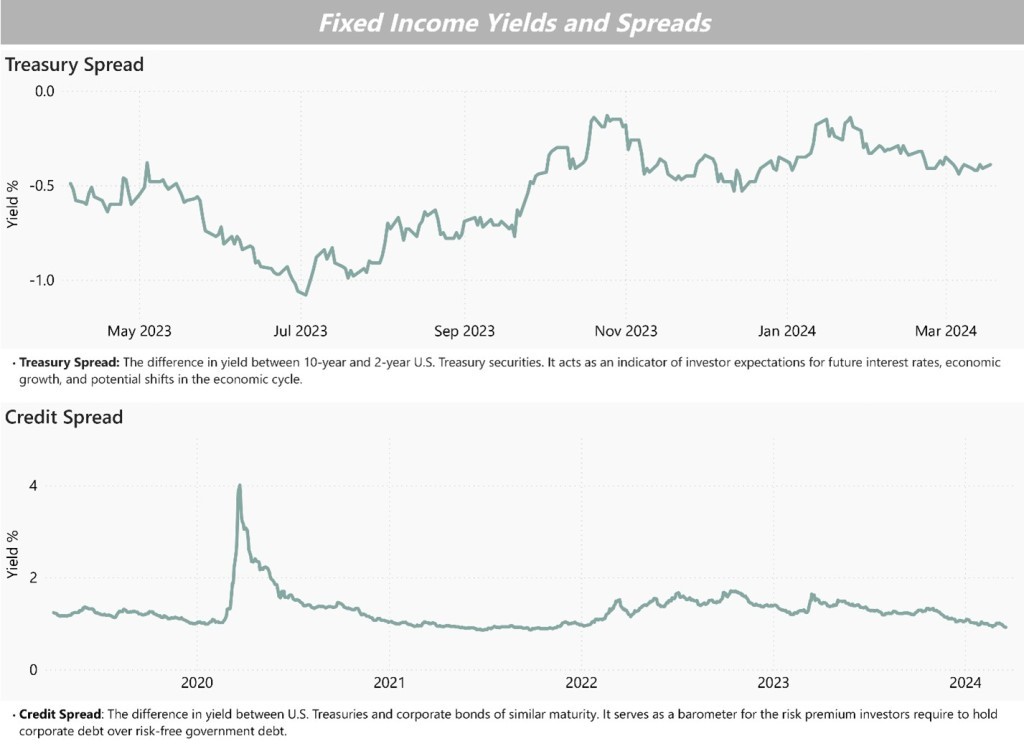
Investor Takeaways: The broader market dynamics reflect a cautious yet opportunistic outlook among investors, navigating through the nuanced interplay of robust equity market growth against a backdrop of evolving fixed-income landscapes. This delicate balance underscores the need for a strategic, well-informed approach to investment in a landscape marked by uncertainty yet punctuated with pockets of clear opportunity.
Alts: Real Estate Focus
The real estate market in the first quarter of 2024 demonstrates a cautious yet opportunistic environment.
Commercial Real Estate: There’s a cautious sentiment in the U.S. commercial real estate market, reflecting broader economic trends and shifting work patterns post-pandemic. This cautiousness is particularly noted in office spaces and retail sectors, adapting to new consumer behaviors and the rise of e-commerce.
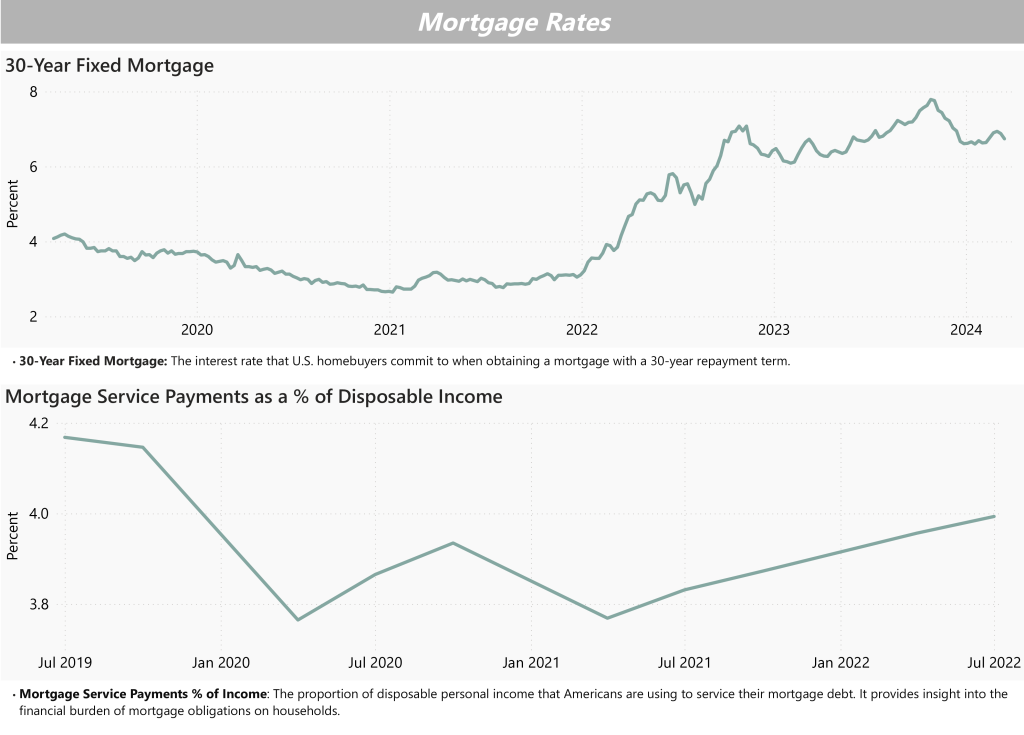
Residential Market: The residential real estate sector is showing signs of stability, with potential easing in mortgage rates and an uptick in home listings. This stability is crucial for buyers navigating the current market, offering a glimpse of resilience amid broader economic uncertainties.
Investment Opportunities: While the commercial sector exhibits caution, the residential market’s relative stability provides a balanced spectrum of opportunities and challenges for real estate investors, reflecting the intricate dynamics between economic indicators and real estate trends.
Closing Remarks
As we wrap up this month’s market newsletter, we thank you for your attention to our analysis. Our goal is to offer you a comprehensive understanding of the past month’s dynamics, empowering you with the knowledge to make informed decisions. We look forward to providing you with further updates and insights in future editions. Thank you for joining us in this comprehensive review of the March 2024 financial landscape.
IMPORTANT DISCLOSURE: The information contained in this report is informational and intended solely to provide educational content to our clients and prospective clients that we find relevant and interesting. Opinions expressed are just that, and are current only as of the data of publication Nothing in this document should be construed as investment advice; we provide advice on an individualized basis only after understanding your circumstances and needs. Data provided comes from sources we believe are reliable, but accuracy is not guaranteed. Discussion of sectors and the performance of region-specific equities and bonds generally refers to market indices. We use the S&P 500 to represent US large-cap; the Willshire Small Cap to represent US small-cap; the MSCI ACWI ex US to represent international equities; the US 10-year Treasury Yield to represent US Treasuries; the ICE BofA European Government Bond Index to represent European bonds; the ICE BofA US Corporate Index Effective Yield to represent investment-grade bonds; the ICE BofA US High Yield Index Effective Yield to represent high-yield bonds. Indices are unmanaged, are not subject to investment management fees or transaction costs, and it is not possible to invest in an index. Index performance can provide general information about how a particular region or investment has performed, but does not provide information about the performance of Ceva’s client portfolios. Actual client performance may differ materially from the index performance discussed. Past performance is not a guarantee of future results. Financial planning is a tool that can help clients consider different current and future scenarios and construct portfolios designed to meet specific goals and address specific risks. Financial planning does not guarantee a positive outcome or prevent loss. It’s important to revisit financial plans and the underlying assumptions of those plans regularly, and to make adjustments as needed to respond to changing circumstances.